


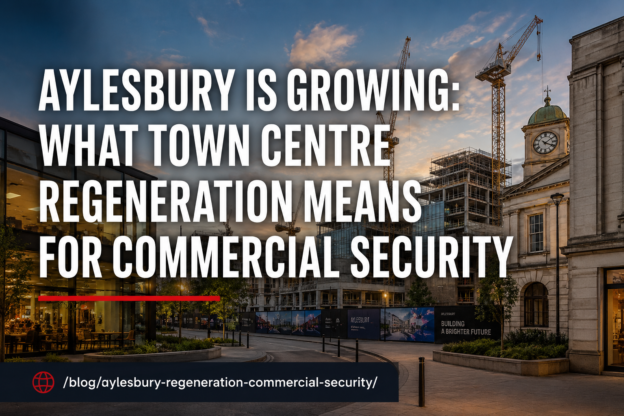
Aylesbury is changing.
Across the town centre, regeneration projects, new homes, improved public spaces and plans for further investment are beginning to reshape how people live, work, shop and spend their leisure time in Buckinghamshire’s county town.
This is not simply a cosmetic programme.
Buckinghamshire Council is positioning Aylesbury as the first major focus of a wider approach to town-centre regeneration across the county. Its Aylesbury Town Centre Investment Prospectus, launched in 2026, describes a coordinated, housing-led programme with the potential for approximately 5,000 new homes within the town centre, with the council owning or controlling more than 60% of key sites.
That sits within the wider growth of Aylesbury. The council says the town already has a population of more than 90,000, with partners committed to delivering around 16,000 new homes by 2033 as part of its Garden Town ambitions.
For businesses, investors, developers and property managers, this represents significant opportunity.
But changing town centres also create changing security requirements.
More residential property means buildings operating beyond traditional office and retail hours. More construction creates temporary sites containing valuable equipment and materials. More events and hospitality increase footfall. New businesses create visitor and access-control requirements. And a town centre that increasingly combines residential, retail, leisure, work and entertainment needs security capable of supporting all of those uses without making the environment feel unwelcoming.
So what could Aylesbury’s regeneration mean for commercial security in Aylesbury?
Aylesbury Town Centre Regeneration Is Already Happening
It is easy to talk about regeneration as though it is something that might happen years in the future.
In Aylesbury, several elements are already visible.
The first phase of the Pavilion Quarter has been completed following demolition of the former Gala Bingo building. The project has created a new route linking the High Street with The Exchange and is intended to develop into a cultural and entertainment quarter containing space for small businesses, start-ups and events.
Buckinghamshire Council is investing £5 million in Aylesbury town centre, with improvements including work to Market Square, enhanced lighting, infrastructure for markets and events, pedestrianisation improvements in Cambridge Street and changes around Kingsbury Square.
New residential uses are arriving too.
In May 2026, the County Apartments development opened in the former Buckinghamshire County Council offices on Walton Street, creating 46 one- and two-bedroom homes while retaining the historic façade of the building. The council sees developments like this as part of a broader strategy to increase town-centre living and bring underused buildings back into productive use.
The longer-term ambition is considerably larger.
Rather than treating individual development sites separately, the council is pursuing a coordinated programme where new homes, businesses, public spaces, services and infrastructure collectively contribute to a more active town centre.
From a security perspective, that matters.
A town centre dominated by retail from 9am until 5pm has one type of security profile.
A town centre where people live, work, shop, eat, attend events and socialise throughout the day and evening has another.
Regeneration Does Not Automatically Mean More Crime
There is an important distinction to make.
Regeneration does not mean crime will automatically increase.
Good regeneration can have the opposite effect by replacing vacant buildings, increasing legitimate activity, improving lighting, creating better public spaces and bringing more people into previously underused areas.
Security should therefore not be viewed as a response to the idea that a growing Aylesbury is somehow becoming less safe.
Instead, growth changes risk.
More people means greater footfall.
More businesses mean additional assets.
More construction means equipment and temporary premises.
More residential properties mean buildings occupied overnight.
More events create temporary concentrations of visitors.
More mixed-use development creates greater interaction between public and private spaces.
Professional security planning should evolve alongside those changes.
What Do Current Aylesbury Crime Figures Tell Businesses?
Understanding local crime should form one part of a wider commercial security assessment.
Thames Valley Police recorded 129 offences in the Aylesbury Town Centre neighbourhood during June 2026. The four most commonly reported categories were violence and sexual offences with 37 reports, shoplifting with 20, anti-social behaviour with 16 and public-order offences with 16.
These statistics should be interpreted carefully. They represent reported offences within a defined policing area and do not show that individual businesses are unsafe or that regeneration is responsible for criminal activity.
What they do demonstrate is that issues such as shoplifting, anti-social behaviour and public-order incidents remain relevant considerations for town-centre businesses.
For a retailer, that may mean improving staff procedures and visible security.
For a hospitality venue, it could mean professionally licensed door supervisors.
For an office or residential development, controlling access may be more important.
There is rarely a single security solution suitable for every property.
Construction Security Will Become Increasingly Important
One of the most obvious consequences of regeneration is construction.
Development sites can be attractive targets because they may contain valuable:
- plant machinery;
- power tools;
- generators;
- fuel;
- copper and cabling;
- building materials;
- contractor equipment;
- temporary site offices;
- electrical equipment; and
- fixtures waiting to be installed.
Construction sites also change constantly.
A project may begin as a relatively open groundworks environment before gradually becoming a partially enclosed building containing increasingly valuable equipment.
Security should change with it.
Professional construction site security in Aylesbury might include access-control officers during working hours, contractor registration, delivery management, perimeter inspections, overnight guarding, mobile patrols and alarm response.
The Pavilion Quarter itself demonstrates another challenge associated with urban construction: work is taking place within an active town centre rather than an isolated development site. During its first phase, Buckinghamshire Council specifically noted increased construction vehicle movements while maintaining access to surrounding businesses and parking.
Urban construction security therefore needs to consider not just theft but the relationship between the building site and the public environment surrounding it.
More Town-Centre Living Creates New Security Requirements
One of the most significant elements of the new strategy is bringing more people into Aylesbury town centre to live.
The investment prospectus suggests around 5,000 homes could potentially be delivered within the centre over time.
That changes the town centre considerably.
Traditionally, many commercial areas become relatively quiet once shops and offices close.
A genuinely mixed-use town centre operates differently.
Residents arrive home in the evening.
Deliveries continue.
Visitors enter apartment buildings.
Contractors require access.
Car parks remain in use.
Communal spaces need monitoring.
Property-management teams may operate outside conventional business hours.
New residential developments may therefore need combinations of:
concierge security, reception staff, controlled visitor access, CCTV monitoring, building patrols, key holding and alarm response.
The appropriate solution depends on the development.
Not every apartment building needs a permanent security officer.
But larger or premium developments may benefit from concierge personnel who combine customer service with security awareness.
This is an important point.
As Aylesbury evolves, some of the most valuable security roles may not look like traditional guarding at all.
Retail Security Remains Important
Aylesbury’s regeneration strategy is partly intended to make the town centre more attractive to businesses and visitors.
That means retail remains important.
Council plans describe Aylesbury’s future as a modern market town with a stronger independent offering, while investment in Market Square is designed to support more traders and public activity.
More footfall is positive for retailers.
However, busy environments also require good loss-prevention procedures.
Thames Valley Police recorded shoplifting among the most commonly reported crime categories in Aylesbury Town Centre in June 2026.
Professional retail security in Aylesbury can contribute through visible deterrence, observation, CCTV support, staff protection and incident management.
But the emphasis must remain on professional security.
A regenerated town centre should feel safer and more welcoming — not heavily guarded.
Most people entering a shop are legitimate customers.
A good retail-security officer should therefore be approachable enough to assist those customers while remaining alert enough to identify suspicious behaviour.
That balance matters.
The Evening Economy Changes the Security Picture
The Pavilion Quarter is being developed partly as a cultural and entertainment destination, with potential for music, events and other activities. Infrastructure improvements in Market Square are also intended to make it easier to accommodate public events.
This could help create a town centre that stays active later into the evening.
That is commercially valuable.
Restaurants benefit.
Bars and cafés benefit.
Entertainment businesses benefit.
Hotels benefit.
Local transport and other services benefit.
But evening activity also creates different security considerations.
Venues may need licensed door supervisors in Aylesbury.
Events may need access control, searching, queue management and crowd management.
Businesses may need staff protection when employees finish late.
Commercial property owners may require later patrols.
Car parks and external areas may need greater attention after conventional office hours.
This does not mean every venue needs a security guard.
It means businesses need to assess their risk based on how the changing town centre affects their individual operation.
Event Security Could Become More Important
Aylesbury already hosts markets, cultural activities and community events.
Regeneration is designed to increase the town centre’s ability to accommodate more of them.
Market Square’s upgraded power supply, for example, was specifically designed to support additional market stalls and more varied public events.
Events temporarily change the security environment.
A relatively quiet public area can suddenly contain hundreds or thousands of people.
Entrances become busier.
Queues develop.
Temporary structures appear.
Contractors and suppliers arrive.
Staff may need to distinguish members of the public from authorised personnel.
Professional event security in Aylesbury can support organisers through access management, crowd control, searching where appropriate, restricted-area protection and incident response.
The important word is proportionate.
A small community event needs a different plan from a large evening entertainment event.
Effective security planning begins with understanding the event rather than simply deciding how many guards to deploy.
New Businesses Mean More Access-Control Requirements
Aylesbury’s regeneration is intended not only to create housing but also to attract businesses and investment.
The Pavilion Quarter is expected to provide opportunities for small businesses and start-ups, while the wider regeneration strategy specifically identifies creating space for business hubs and modern working environments as part of Aylesbury’s future.
Commercial buildings increasingly combine multiple organisations under one roof.
That creates questions such as:
Who should have access?
How are visitors verified?
Who manages contractors?
How are deliveries handled?
What happens after reception closes?
Who responds to an alarm overnight?
These questions are often more important than simply whether there is a security guard present.
For larger premises, professional reception security in Aylesbury can combine visitor management with customer service.
For smaller businesses, electronic access control supported by professional key holding and alarm response may be enough.
The security arrangement should reflect the actual building.
Vacant and Transitional Properties Need Attention Too
Regeneration does not happen overnight.
There is often a transitional period where buildings become vacant before redevelopment begins.
Empty premises can create risks including trespassing, vandalism, theft, attempted occupation, fire, water damage and general deterioration.
Buckinghamshire Council is currently exploring new powers such as High Street Rental Auctions in Aylesbury and other Buckinghamshire town centres as one way of helping bring persistently vacant commercial properties back into use.
While buildings remain empty, property owners still need to understand their responsibilities and vulnerabilities.
Vacant-property security might include:
mobile patrols, scheduled property inspections, alarm response, temporary guarding and CCTV monitoring.
Regular documented inspections can also help identify maintenance problems before they become expensive.
Mobile Patrols Can Suit a Changing Town Centre
Permanent guarding is not always necessary.
For smaller businesses, vacant premises, offices and sites requiring occasional out-of-hours checks, mobile security patrols in Aylesbury can provide a more proportionate option.
A mobile officer can check agreed locations including:
doors, windows, gates, external areas, car parks, construction compounds and loading areas.
Patrols can also operate at varying times so the routine is less predictable.
For a growing town centre containing many different types of premises, this flexibility is useful.
A business may not require an officer permanently stationed outside.
It may simply need somebody checking the premises several times overnight and responding if an alarm activates.
Key Holding and Alarm Response Should Be Part of the Conversation
Growth also means more businesses, offices and residential property requiring out-of-hours protection.
If an alarm activates at 2am, somebody has to respond.
For many businesses, that person is still a manager, director or employee.
This raises an obvious question:
Should an employee really be expected to investigate an unknown security situation alone in the middle of the night?
Professional key holding and alarm response in Aylesbury provides another option.
A security provider can securely hold authorised keys and send trained personnel when attendance is required.
The officer can inspect the premises, investigate according to agreed procedures, contact management and escalate to emergency services where necessary.
For many businesses, this is one of the simplest ways to improve out-of-hours security without employing a permanent guard.
Aylesbury’s Growth Extends Beyond the Town Centre
The bigger picture should not be overlooked.
Aylesbury’s regeneration sits within much larger development across the town.
Buckinghamshire Council says Aylesbury has more than 90,000 residents and is planning significant growth associated with Garden Town status.
In April 2026, Buckinghamshire Advantage and Barratt Redrow also announced progress on the 495-acre Woodlands development south-east of Aylesbury. The scheme already has planning permission for more than 1,100 homes, a hotel and conference centre, community and sporting facilities and approximately one million square feet of business and employment space.
Development on that scale creates commercial-security requirements long before the completed buildings are occupied.
There are construction compounds to protect.
Equipment and materials arrive.
Contractors need access.
New commercial premises eventually open.
Warehouses and offices become operational.
Hotels and hospitality facilities receive visitors.
Security requirements evolve as development moves from construction to occupation.
For local security providers, understanding that lifecycle is increasingly important.
Commercial Security Should Support Regeneration — Not Work Against It
The strongest regeneration creates places where people want to spend time.
Security should support that objective.
A town centre full of intimidating barriers and unnecessarily aggressive security personnel would undermine the very environment regeneration is trying to create.
Instead, good commercial security is often subtle.
A retail officer provides reassurance while helping a customer with directions.
A reception officer greets a visitor while ensuring they are properly authorised.
A mobile patrol checks a building after everyone has gone home.
A construction guard prevents unauthorised access without interfering with surrounding businesses.
An event officer manages a queue before it becomes a problem.
A concierge officer gets to know the residents of a building while maintaining control over visitors.
Professional security is most effective when it becomes part of how a place operates.
What Should Aylesbury Businesses Do Now?
Businesses do not need to wait until regeneration is complete before reviewing security.
In fact, periods of change are often the ideal time to reassess existing arrangements.
Consider whether entrances remain appropriate, whether lighting and CCTV still provide sufficient coverage, how contractors are managed, who holds emergency keys and whether employees are expected to respond to incidents outside normal working hours.
Businesses should also consider whether their surroundings have changed.
A previously quiet street may now have more evening activity.
Construction may temporarily create new access routes.
A nearby vacant unit may become occupied.
New residential development may increase pedestrian activity after shops close.
Security risk assessments should not be one-off documents that remain unchanged for years.
As the environment changes, the security assessment should change with it.
Supporting a Growing Aylesbury
The direction of travel is clear.
Buckinghamshire Council is pursuing a substantial regeneration programme, with new town-centre housing, improved public spaces, cultural development, business opportunities and wider Garden Town growth.
The aim is to create a more vibrant Aylesbury where more people live, work, shop and spend time.
Professional security has a supporting role in making that successful.
Not by turning the town centre into a fortress.
But by ensuring businesses, developments and public-facing environments have the right measures in place for the risks they actually face.
For some organisations, that will mean professional security guards in Aylesbury.
For others, the solution may be construction security, retail guards, reception personnel, event security, mobile patrols, key holding or alarm response.
The important thing is that security evolves alongside the town.
Because as Aylesbury grows, the question for businesses should not simply be:
“Do we need security?”
It should be:
“Does the security we have today still match the Aylesbury we will be operating in tomorrow?”
All Time Security — Professional Commercial Security in Aylesbury
All Time Security provides tailored commercial security solutions for businesses, developers, retailers, construction projects and commercial properties across Aylesbury and Buckinghamshire.
Services include professional security guarding, construction-site security, retail security, mobile patrols, key holding and alarm response, event security, door supervision, reception and concierge security and security risk assessments.
Protecting people. Protecting premises. Supporting Buckinghamshire businesses.